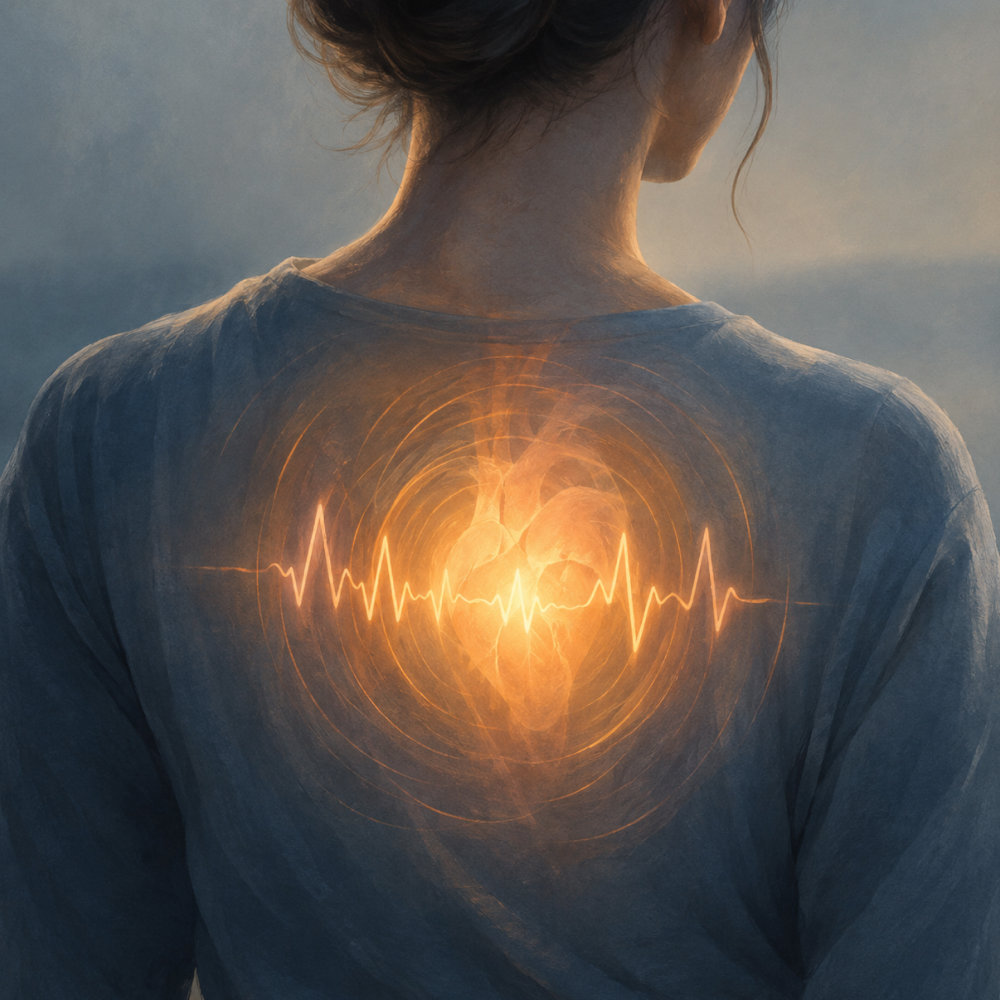
You’re sitting still, nothing dramatic is happening, and yet your heart is pounding like you just ran up a flight of stairs. No exercise, no coffee, no obvious trigger. For a lot of people, this is one of the most confusing signs of anxiety — because it shows up in the body before the mind has even registered that something is wrong.
1. The racing heart: a physical sign of anxiety
When the brain senses a threat — real or imagined — it triggers the release of adrenaline and cortisol, preparing the body for “fight or flight.” The heart beats faster to pump more blood to your muscles. The problem is, this system doesn’t always wait for an actual danger. Chronic stress can keep it partially switched on, so your heart reacts to a stressful thought the same way it would to a real threat.
2. Why it happens even when you feel calm
This is what confuses people the most. You might not feel “anxious” in the moment, yet your body is already responding as if you are. Anxiety doesn’t always announce itself with obvious worry — sometimes the body reacts first, and the emotional awareness catches up later, or never fully arrives at all.
3. Shortness of breath and chest tightness
A racing heart is often paired with shallow breathing or a feeling of tightness in the chest. This combination is so intense that many people mistake it for a heart problem and end up in the emergency room, only to be told their heart is completely healthy — the American Heart Association notes that anxiety-related chest symptoms are a common reason for ER visits that turn out to be non-cardiac.
4. Other signs of anxiety that hide in the body
Beyond the heart, anxiety often shows up as muscle tension, digestive issues, dizziness, or a persistent feeling of restlessness. These physical signs of anxiety are frequently dismissed as unrelated health issues, which is part of why anxiety can go unaddressed for so long — something we cover in more depth in our article on anxiety vs. everyday stress.
5. When a racing heart needs medical attention
Not every racing heart is anxiety, and it’s worth ruling out other causes first. According to the Mayo Clinic, a doctor can help distinguish anxiety-related palpitations from cardiac or thyroid conditions through a simple evaluation. If episodes are frequent, intense, or accompanied by fainting or severe chest pain, seek medical care first.
Managing the physical signs of anxiety
Once other causes are ruled out, techniques like slow diaphragmatic breathing, grounding exercises, and regular physical activity can help calm the nervous system over time. For persistent or distressing symptoms, speaking with a therapist trained in anxiety disorders is often the most effective next step — see our guide on when anxiety and depression overlap for related signs worth watching.